
How Big Do Tuna Fish Get? Types, Sizes & Record Catches
Types of Tuna and Their Sizes
Tuna fish are remarkable creatures that roam the world’s oceans, and they come in various types, each with its unique characteristics and sizes. The most common types of tuna include the Bluefin, Yellowfin, Albacore, Bigeye, and Skipjack. Bluefin tuna are the giants of the tuna family, often reaching astonishing sizes. The Atlantic Bluefin, in particular, can grow up to 10 feet in length and weigh as much as 1,500 pounds, making them the true titans of the sea.
Yellowfin tuna, while not as massive as their Bluefin cousins, are still impressive in their own right. They typically range between 3 to 7 feet in length and can weigh up to 400 pounds. These sleek, torpedo-shaped fish are known for their speed and agility, making them a favorite among sport fishermen. Albacore tuna, on the other hand, are smaller, generally weighing between 15 to 80 pounds and reaching lengths of up to 4 feet. Despite their smaller size, they are highly valued for their mild flavor and tender flesh. Call Cambo Fishing Charters so they can put you on tuna like this!
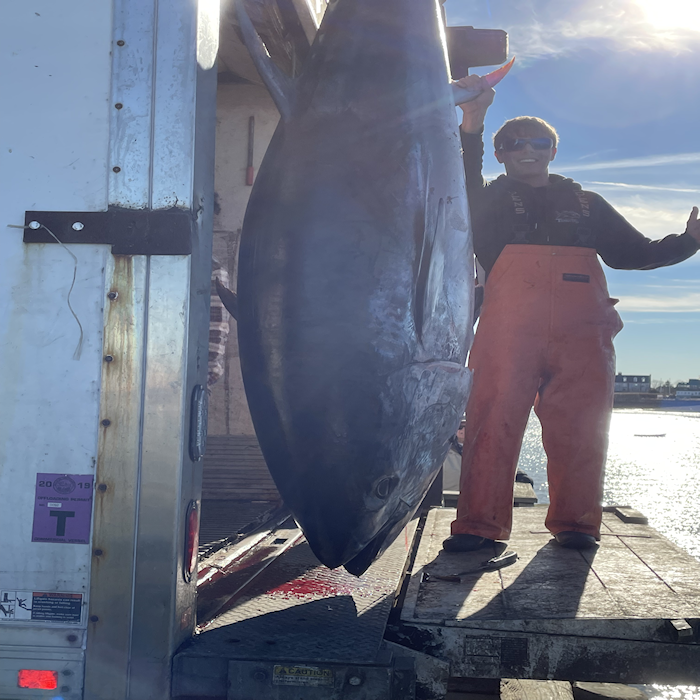
Bigeye tuna are another substantial species, often confused with Yellowfin tuna due to their similar appearance. They can grow up to 8 feet in length and weigh as much as 400 pounds. Skipjack tuna, the smallest of the commonly known species, typically weigh between 10 to 25 pounds and reach lengths of up to 3 feet. Despite their smaller size, Skipjack tuna are incredibly abundant and play a significant role in the global tuna market.
The Record-Setting Tuna: World Records and Notable Catches
Throughout history, there have been several record-setting tuna catches that have captured the imagination of anglers and marine enthusiasts alike. The most famous of these records is held by an enormous Atlantic Bluefin tuna caught off the coast of Nova Scotia, Canada, in 1979. This colossal fish weighed an astounding 1,496 pounds, cementing its place in the annals of fishing history.
Another notable record involves a Pacific Bluefin tuna caught off the coast of Japan in 2012. This behemoth weighed in at 1,073 pounds and fetched a staggering price of $1.76 million at a Tokyo auction, highlighting the immense value placed on these ocean giants. Such record-breaking catches are rare, but they serve as a testament to the incredible potential size of these magnificent creatures.
Yellowfin tuna have also seen their share of record-setting catches. In 2012, a Yellowfin tuna caught off the coast of Cabo San Lucas, Mexico, weighed an impressive 427 pounds, setting a new world record for the species. These remarkable catches not only showcase the sheer size that tuna can achieve but also underscore the allure and excitement of tuna fishing for anglers worldwide.
Factors Influencing Tuna Growth
Several factors influence the growth and size of tuna fish, ranging from genetics to environmental conditions. One of the primary determinants of a tuna’s size is its species. As previously mentioned, Bluefin tuna are genetically predisposed to grow larger than other species like Skipjack or Albacore. However, even within a species, individual growth rates can vary significantly.
Diet plays a crucial role in the growth of tuna. These predatory fish feed on a variety of smaller fish, squid, and crustaceans, and a rich, nutrient-dense diet can significantly impact their growth. In regions where food is abundant, tuna can grow rapidly and reach larger sizes. Conversely, in areas where food is scarce, growth rates may be stunted.
Environmental factors, such as water temperature and oxygen levels, also influence tuna growth. Tuna are warm-blooded fish and thrive in temperate waters. Warmer water temperatures can enhance metabolic rates, leading to faster growth. Additionally, areas with high oxygen levels are conducive to healthy growth, as tuna require a significant amount of oxygen to sustain their active lifestyles. Overfishing and habitat degradation, however, can negatively impact these factors, leading to smaller, less robust populations.
Tuna Habitat and Distribution
Tuna are highly migratory fish, traveling vast distances across the world’s oceans in search of food and suitable breeding grounds. Their distribution is influenced by several factors, including water temperature, salinity, and the availability of prey. Bluefin tuna, for example, are found in both the Atlantic and Pacific Oceans, with distinct populations in each region. Atlantic Bluefin tuna typically migrate between the Gulf of Mexico, the Mediterranean Sea, and the North Atlantic, while Pacific Bluefin tuna are found in the western and central Pacific Ocean.
Yellowfin tuna, on the other hand, have a more tropical distribution, inhabiting the warm waters of the Atlantic, Indian, and Pacific Oceans. They are often found near the equator, where water temperatures are consistently warm. Bigeye tuna have a similar distribution but are known to inhabit deeper waters compared to other species. They are often found at depths of up to 1,500 feet, where they hunt for squid and other deep-sea prey.
Albacore tuna have a more temperate distribution, inhabiting the Atlantic, Pacific, and Indian Oceans. They are known for their long migrations, often traveling thousands of miles between feeding and spawning grounds. Skipjack tuna, the most abundant and widely distributed species, are found in tropical and subtropical waters worldwide. They are particularly abundant in the central and western Pacific Ocean, where large schools can be found feeding on smaller fish and plankton.
The Life Cycle of Tuna Fish
The life cycle of tuna fish is a fascinating journey that begins with spawning and continues through various stages of growth and development. Tuna are known for their high fecundity, with females capable of producing millions of eggs in a single spawning season. Spawning typically occurs in warm, nutrient-rich waters, where the eggs can develop rapidly.
Once the eggs hatch, the larvae are left to fend for themselves in the open ocean. These tiny, translucent larvae are highly vulnerable and face numerous threats, including predation and environmental factors. However, those that survive grow quickly, feeding on plankton and small fish. As they grow, they undergo several stages of development, transitioning from larvae to juveniles and eventually to adults.
Adult tuna are powerful swimmers and can travel vast distances in search of food and suitable breeding grounds. They continue to grow throughout their lives, with some species, like Bluefin tuna, capable of living for up to 40 years. The life cycle of tuna is a testament to their resilience and adaptability, allowing them to thrive in the dynamic and often harsh conditions of the open ocean.
Tuna Fishing Techniques and Their Impact on Size
Tuna fishing is a time-honored tradition that has evolved significantly over the years. Various techniques are used to catch these ocean giants, each with its own impact on the size and sustainability of tuna populations. One of the most common methods is purse seining, which involves encircling a school of tuna with a large net and then drawing the net closed like a drawstring purse. This method is highly efficient and can result in large catches, but it often targets smaller, juvenile tuna, which can impact overall population size.
Longline fishing is another widely used method, involving the deployment of long lines with baited hooks that can extend for miles. This technique is particularly effective for catching larger tuna, such as Bluefin and Bigeye. However, longline fishing can also result in significant bycatch, including sharks, seabirds, and other non-target species, which can have detrimental effects on marine ecosystems.
Sport fishing, or recreational fishing, is another popular method, particularly for targeting large Yellowfin and Bluefin tuna. Anglers often use rod-and-reel techniques, employing various lures and baits to attract these powerful fish. While sport fishing tends to have a lower impact on overall tuna populations compared to commercial methods, it still contributes to the overall pressure on these species. Sustainable fishing practices and regulations are crucial to ensuring the long-term health and size of tuna populations.
Conservation Status of Tuna Species
The conservation status of tuna species is a pressing concern, as overfishing and habitat degradation threaten their populations. Bluefin tuna, in particular, have faced significant declines due to high demand and intensive fishing pressure. Both the Atlantic and Pacific Bluefin tuna are considered overfished, with the International Union for Conservation of Nature (IUCN) listing them as endangered and vulnerable, respectively.
Yellowfin tuna are also experiencing pressure from overfishing, although their populations are more stable compared to Bluefin tuna. The IUCN lists Yellowfin tuna as near threatened, highlighting the need for continued monitoring and management. Bigeye tuna face similar challenges, with overfishing and bycatch posing significant threats. They are currently listed as vulnerable by the IUCN.
Albacore and Skipjack tuna populations are relatively stable, but they are not immune to the impacts of overfishing and environmental changes. Albacore tuna are listed as near threatened, while Skipjack tuna are considered of least concern. However, the increasing demand for tuna products and the expansion of fishing efforts necessitate diligent conservation measures to ensure the sustainability of all tuna species. International cooperation and effective management strategies are essential to protect these valuable ocean giants.
Culinary Value of Tuna: Size and Taste
Tuna fish are highly prized for their culinary value, with different species offering unique flavors and textures. Bluefin tuna, particularly the fatty cuts known as toro, are considered a delicacy in many cuisines, especially in Japan. The rich, buttery flavor and melt-in-your-mouth texture of Bluefin tuna make it a sought-after ingredient for sushi and sashimi. Larger Bluefin tuna are often preferred for their higher fat content, which enhances their flavor and culinary appeal.
Yellowfin tuna, also known as ahi, is another popular choice for sushi and sashimi. While it is leaner than Bluefin tuna, it offers a mild, clean flavor that pairs well with various seasonings and preparations. Yellowfin tuna is also commonly used in dishes like poke, seared steaks, and grilled fillets. Its versatility and accessibility make it a favorite among chefs and home cooks alike.
Albacore tuna, often referred to as “white tuna,” is known for its mild flavor and firm, flaky texture. It is commonly used in canned tuna products, but fresh Albacore is also enjoyed in sushi and cooked preparations. Bigeye tuna, with its rich, meaty flavor and firm texture, is another prized species for sushi and sashimi. Skipjack tuna, while smaller and less fatty than other species, is widely used in canned tuna products and is a staple in many households worldwide.
Conclusion: The Future of Tuna Fish and Their Size
The future of tuna fish and their remarkable sizes hinges on our collective efforts to manage and protect these valuable species. Sustainable fishing practices, effective management strategies, and international cooperation are essential to ensure the long-term health and vitality of tuna populations. As demand for tuna products continues to grow, it is crucial that we balance economic interests with ecological responsibility.
Innovations in aquaculture and fisheries management offer promising solutions for the future of tuna. Advances in tuna farming techniques, such as the successful breeding of Bluefin tuna in captivity, can help alleviate pressure on wild populations. Additionally, the implementation of stricter regulations and enforcement measures can reduce overfishing and bycatch, allowing tuna populations to recover and thrive.
Public awareness and consumer choices also play a vital role in the future of tuna fish. By supporting sustainable seafood options and advocating for responsible fishing practices, we can contribute to the preservation of these magnificent ocean giants. The awe-inspiring size and beauty of tuna fish serve as a powerful reminder of the importance of protecting our oceans and the incredible creatures that inhabit them.